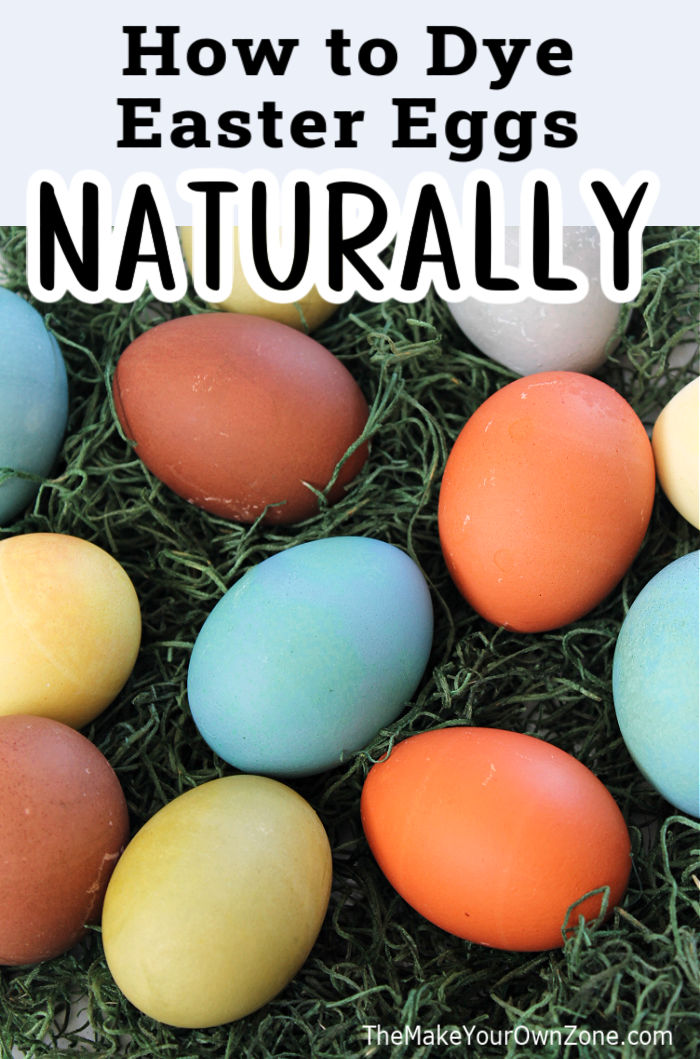
How To Dye Easter Eggs Naturally
Make your own natural Easter eggs dyes using ordinary food items such as red cabbage, blueberries, and onion skins. Here are six ideas for colors you can make following a two step process, first creating the dye liquid, and then boiling the eggs in the dye liquid.
Equipment:
- Small Saucepan
Materials:
- 3 cups water
- 3 Tbl vinegar
- assorted food stuff (see notes below)
- eggs
Instructions:
General Instructions:
Make The Dye Bath Liquid
- Combine the 3 cups of water and the 3 tablespoons of vinegar in a small saucepan. Add your food stuffs (see the list below for which foods to use to make certain colors).
- Put the saucepan with the vinegar water and food stuff on the stove and bring to a boil. Once the mixture is boiling, turn the heat down to a low simmer and let set for 20 minutes so the water can absorb more color.
- Remove from the heat and drain the liquid from the pan into a bowl, and discard the soggy food stuff.
- Let the dye water cool completely before moving on to the second part of the process which is boiling the eggs. If an egg that is still cold from the refrigerator is introduced to liquid that is still hot, it could crack.
Boil the Eggs in the Dye Liquid
- Put your egg(s) in a small saucepan with the cooled dye liquid. Put on the stove and heat to just starting to boil.
- Turn the heat off and cover the pan. Let the eggs set like this in the pan for 12 minutes to hard boil and soak up the color. See notes below for each individual color.
Making the Six Different Colors:
- Dark Reddish Brown: Use a handful of red onion skins in the vinegar water to the make the dye liuqid. For the second part of the process, you should see the eggs nicely colored at the end of the 12 minutes.
- Dark Orange: Use a handful of yellow onion skins in the vinegar water to make the dye liquid. For the second part of the process, you should see the eggs nicely colored at the end of the 12 minutes.
- Blue: Use chopped red cabbage (about a 1/4 of the head of cabbage) in the vinegar water to make the dye liquid. For the second part of the process, the eggs will be just barely colored at the end of the 12 minutes. Transfer the dye water to another container with the eggs and let them soak for several more hours and they will turn a lovely shade of robin's egg blue.
- Light Violet/Gray: Use about 3/4 cup of blueberries in the vinegar water to make the dye liquid. For the second part of the process, the eggs will be lightly colored at the end of the 12 minutes. You can transfer the dye water and eggs to another container and let them soak for several more hours to deepen the color.
- Green: Save the blueberry dye bath liquid and add 1 teaspoon of turmeric. The eggs should be a light shade of green after the 12 minutes.
- Yellow: This is the only color that does not require making a heated dye bath liquid first. Instead, simply combine 1 cup of water with 2 or 3 teaspoons of ground turmeric. Add a hard boiled egg and let it soak for several hours to absorb the color. Note: Turmeric does not completely dissolve in water and may settle during the process. You can give the container a little swish every now and then. If some turmeric does settles on the egg it can also create some interesting texture to the color.
Notes:
You can also make larger batches of the dye liquid. Just use a tablespoon of vinegar for each cup of water and add a bit more food stuff for each additional cup of water.
Vinegar is added because it is acidic which can etch and roughen the surface of the egg to help it absorb color. However you can also try this method without the vinegar if you don't have that ingredient.